


DEWALT DCD771C2 Review: The Drill We Hand to Beginners (and Keep on the Pegboard Ourselves)
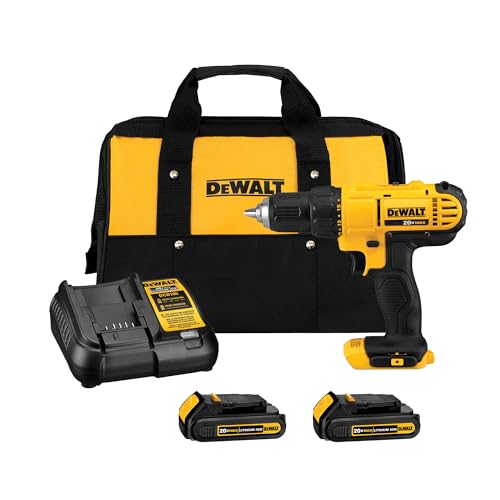
There’s a reason this drill shows up in more first-time tool kits than almost anything else on the shelf. The DEWALT 20V MAX DCD771C2 is the drill people reach for when they want a name they trust, a price that doesn’t sting, and something that just works. We’ve had this kit knocking around our shop for long enough to form a real opinion, and we’ve put it next to drills costing two and three times as much.
Here’s the short version before we get into the weeds: the DCD771C2 is one of the best values in cordless drills, period. It is not the most powerful, most efficient, or longest-running drill you can buy, and we’ll be honest about exactly where it runs out of road. But for the woodworker building cabinets, hanging shelves, assembling furniture, and driving the occasional long screw into pine or plywood, this is a genuinely good tool that punches well above its price.
This review is written by people who own dozens of drills. We’re not interested in talking you into something. We’re interested in telling you whether this is the right drill for your bench.
Performance & Power
The DCD771C2 runs a brushed motor rated at 300 unit watts out (UWO), which is DEWALT’s combined measure of torque and speed. In plain shop terms: it has plenty of grunt for woodworking. We’ve driven 3-inch deck screws into framing lumber, sunk countless 2.5-inch construction screws, and bored 1-inch spade-bit holes through 2x stock without the motor bogging down in a way that worried us.
The two-speed transmission is the part we lean on most. Low gear (0–450 RPM) gives you the torque and control for driving fasteners and running larger bits. High gear (0–1,500 RPM) is where you want to be for pilot holes, small twist bits, and general drilling. The trigger has good progressive control once your finger learns it — some folks find it a touch sensitive at first, and we’d agree the first quarter-inch of travel ramps up faster than a premium drill, but that’s muscle memory you build in an afternoon.
Where the brushed motor shows its limits is sustained heavy load. Bore a 2-inch Forstner bit through hard maple repeatedly, or drive a long run of 4-inch structural screws, and you’ll feel the motor heat up and the drill work harder than a brushless equivalent would. The brushed design is simply less efficient — more of your battery’s energy turns into heat instead of rotation. For occasional heavy tasks it’s fine. As a daily driver for demanding work, a brushless drill will run cooler and longer.
Build Quality & Durability
This is a DEWALT, and it feels like one. The housing is solid, the rubber overmold on the grip is generous, and nothing rattles or flexes in a way that suggests corners were cut. It’s survived being dropped off a sawhorse onto a concrete floor in our shop more than once without complaint, which is about the most honest durability test a tool gets.
The one area we’ll flag — and it’s a known pattern, not a one-off — is the chuck. The DCD771C2 uses a 1/2-inch single-sleeve ratcheting keyless chuck, and on this price tier we occasionally see complaints about bits walking loose or the chuck wearing out faster than the rest of the tool over years of hard use. A few things to know: most “slipping” in the first week is user technique — you need to grip the sleeve firmly and ratchet it down hard until it clicks past tension; a snug-but-not-cranked chuck will let a bit spin under load. That said, on a brushed budget drill the chuck is the component most likely to need attention down the line, and it’s a replaceable part if it ever does. The 3-year limited warranty covers you against defects, which is reassuring at this price.
For the homeowner and hobbyist woodworker, this thing will last years. For someone running it eight hours a day on a job site, the chuck and the brushed motor are the two parts that’ll age fastest — and at that point you’re outside the tool’s intended lane anyway.
Ease of Use & Ergonomics
At roughly 3.6 pounds with a battery installed and a compact 13.9-inch length, the DCD771C2 is light and easy to handle. That compact head length matters more than the spec sheet suggests — it’s what lets you get the drill into a face-frame cabinet, between studs, or up under a sink without contorting yourself. We reach for compact drills constantly for exactly this reason.
The 15-position clutch is well-defined and genuinely useful. For furniture assembly and any time you’re driving into softer wood or thin stock, dialing the clutch back keeps you from stripping screw heads or blowing past flush and crushing the surface. The LED light sits at the base of the handle and stays on briefly after you release the trigger — small touch, big deal when you’re working in the back of a cabinet or a dim basement.
Honest ergonomic nitpicks: the drill is a little front-heavy and can nose-dive when you set it down, the battery release sits where some users fumble for it at first, and the forward/reverse and speed selector positions take a session to learn if you’re coming from another brand. None of these are dealbreakers. They’re the kind of thing you stop noticing by the end of your first project.
Battery & Runtime
This is the most important section of the review, so read it carefully — it’s where the kit’s biggest compromise lives.
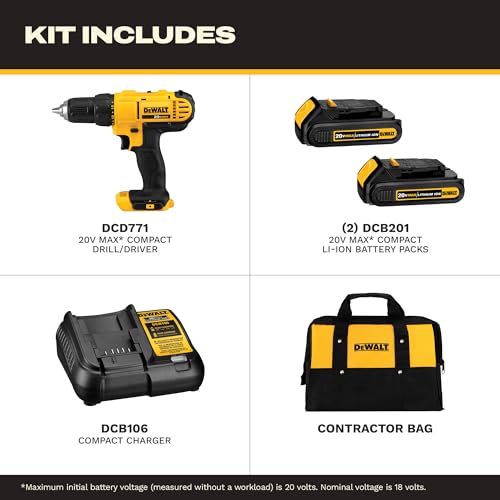
The DCD771C2 ships with two 20V MAX 1.3Ah batteries. These are small packs. They charge fast and keep the drill light and balanced, which is genuinely pleasant for around-the-house work. But 1.3Ah is the smallest battery DEWALT puts in a kit, and you will notice it on any sustained job. Expect roughly 30–45 minutes of moderate driving and drilling per charge, and meaningfully less if you’re boring big holes or driving long screws into hardwood.
The saving grace is that the kit includes two batteries, so you can run one while the other charges and effectively work continuously. For most weekend projects, the two-pack rotation is plenty. But if you’re assembling a full kitchen’s worth of cabinets in a day, you’ll be swapping and charging more than you’d like.
Here’s the upgrade tip we give everyone: these batteries are fully compatible with the entire DEWALT 20V MAX lineup. Buy a single 4.0Ah or 5.0Ah pack down the road and the same drill transforms — three to four times the runtime, and the extra weight actually balances the tool nicely. The brushed motor will still draw more than a brushless one, but a bigger battery is the single best $40–$60 you can spend to extend this kit’s usefulness.
How It Handles Real Woodworking Tasks
Specs are abstract. Here’s how the DCD771C2 actually performs on the work most of us do.
 View on Amazon
Cabinet & Furniture Assembly
This is the drill’s sweet spot. The compact head fits inside carcasses, the clutch prevents over-driving into face frames and thin panels, and there’s plenty of power for cabinet screws and confirmat fasteners. If most of your shop time is building boxes, this drill will rarely frustrate you.
Pilot Holes & General Drilling
High gear and a sharp brad-point bit make quick, clean pilot holes all day. The drill is light enough that hole accuracy doesn’t suffer from fatigue, and the LED earns its keep on dark stock.
Driving Long Screws into Hardwood
This is where a drill/driver starts to show strain. The DCD771C2 will sink a 3-inch screw into oak or maple, but you’ll want a properly sized pilot hole and you’ll feel the motor work. For occasional long screws, it’s fine. For a deck’s worth of them, you’d be happier with an impact driver (more on that below).
Pocket-Hole Joinery
The drill handles pocket-hole drilling well in low gear, and the clutch helps you seat pocket screws without blowing through. Pair it with a pocket-hole jig and it’s a reliable joinery partner for face frames and quick carcass work.
 View on Amazon
What It Won’t Do
This is a drill/driver, not a hammer drill — there’s no masonry mode. Don’t expect to anchor into brick or concrete with it; you’ll burn a bit and get nowhere. It’s also not built for heavy industrial production work. Know those two limits and you’ll never be disappointed.
Who Should Buy It — and Who Shouldn’t
Buy the DCD771C2 if you are:
- A beginner or intermediate woodworker building your first serious kit and you want a trustworthy drill without overspending.
- A homeowner who hangs shelves, assembles furniture, and tackles weekend projects.
- Someone who wants a foothold in the DEWALT 20V MAX battery ecosystem — every future tool and battery you add will be cross-compatible.
- A woodworker who values a light, compact drill for cabinet and furniture work over raw power.
Skip it (or look higher up the line) if you are:
- A pro or heavy daily user who needs maximum efficiency and runtime — a brushless drill will serve you better long-term.
- Someone who routinely bores large-diameter holes or drives long fasteners into hardwood all day.
- Anyone who needs to drill masonry — you need a hammer drill, which this isn’t.
- A user who wants long runtime out of the box and doesn’t want to buy a bigger battery later.
How It Compares
vs. a Brushless DEWALT (e.g., the DCD777/DCD791 family)
Step up to a brushless DEWALT and you get a more efficient motor that runs cooler, squeezes more work out of every charge, and tends to age more gracefully under load. The trade-off is price — you’ll typically pay noticeably more. If you drill and drive frequently and want the tool to last through years of regular use, the brushless upgrade is worth considering. If your use is lighter and more occasional, the DCD771C2’s brushed motor is perfectly adequate and the savings are real.
vs. a Higher-Capacity Kit
The biggest weakness here is the 1.3Ah batteries, and some kits ship with 2.0Ah, 4.0Ah, or 5.0Ah packs instead. If you can find the same drill (or a step-up model) bundled with larger batteries, that often delivers more practical value than buying the small-battery kit and adding a big pack separately. Compare the math on whatever’s in front of you — but don’t underestimate how much a bigger battery changes the everyday experience of this tool.
 View on Amazon
Adding an Impact Driver
The single best upgrade for most woodworkers isn’t a fancier drill — it’s a two-tool combo that pairs a drill/driver with a dedicated impact driver. Let the drill bore holes while the impact driver handles fasteners; the impact’s concussive action sinks long screws into hardwood effortlessly and spares your wrist and the drill’s motor. DEWALT sells combo kits built around this exact drill, and we think that’s a smarter buy than a single fancier drill for nearly everyone. If your budget allows only one purchase, start with the DCD771C2 and add an impact driver later on the same battery platform.
The Bottom Line
The DEWALT DCD771C2 earns its popularity. It’s a light, capable, well-built drill from a brand that stands behind it, at a price that makes it an easy recommendation for beginners, homeowners, and hobbyist woodworkers. The compact size, useful clutch, and two-battery kit make it a genuinely pleasant tool for cabinet building, furniture assembly, pilot holes, and pocket-hole joinery.
Just go in clear-eyed about the two compromises: the brushed motor is less efficient than brushless under heavy load, and the 1.3Ah batteries are small. Neither matters much for light-to-moderate work, and the battery limitation is solved cheaply by adding a larger pack later. If you’re a heavy daily user or you drill hardwood and masonry all day, spend up for brushless or add an impact driver. For everyone else — which is most of us — this is one of the smartest drills you can put on your bench.